

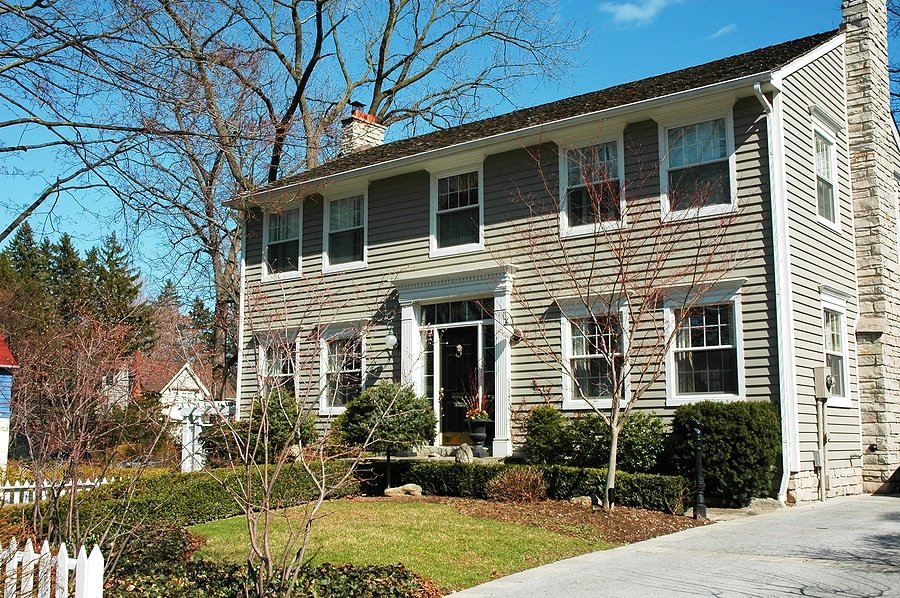
Is your home’s exterior ready for another Northern Illinois summer? For homeowners in Grayslake, Lake Zurich, Wauconda, and throughout Lake County, spring is the ideal time to inspect aging windows, siding, and insulation before peak-season pricing and scheduling delays begin. If your home was built in the 1980s or 1990s, this practical checklist will help you identify common exterior issues, improve energy efficiency, and plan upgrades before summer heat arrives.
Spring Exterior Checklist for Lake County Homeowners
- Check for Window Seal Failure
Look for condensation or fog between panes; failed seals significantly reduce insulation performance. - Test for Air Drafts Around Frames
Feel for airflow near window seams in the evening; drafts signal air-sealing problems. - Review Window Operation and Locks
Sticking, misaligned, or non-locking windows reduce efficiency and safety. - Compare Utility Bills
Higher heating and cooling costs in similar homes often indicate aging windows or poor insulation. - Inspect Siding for Warping or Buckling
Older vinyl siding from the 1980s and 1990s is prone to moisture intrusion after decades of freeze-thaw cycles. - Examine Caulking Around Windows and Doors
Cracked or missing caulk allows water to penetrate and causes structural damage. - Check Soffit and Fascia Condition
Peeling paint, rot, or gaps can affect attic ventilation and gutter performance. - Inspect the Bottom Course of Siding
Ground-level damage often signals long-term moisture exposure. - Measure Attic Insulation Depth
If attic joists are visible, the insulation likely falls below modern R-49 to R-60 standards. - Evaluate Exterior Wall Temperature
Cold interior wall surfaces in winter indicate insufficient wall insulation. - Inspect Rim Joists
Uninsulated rim joists are a major source of energy loss in older Northern Illinois homes. - Plan Projects Before Peak Season
Ordering windows and securing permits in early spring avoids summer scheduling delays and material lead times.
A Spring Checklist for Lake County Homeowners in Grayslake, Lake Zurich, and Wauconda
There’s a short window every year (roughly from late February through early April) when Lake County homeowners can get ahead of the spring rush, secure a spot on a contractor’s schedule, and actually have the work done before summer heat arrives. Miss it, and you’re looking at late summer timelines, peak-season pricing, and another year of drafty windows, faded siding, and higher energy bills.
If you’re a homeowner in Grayslake, Lake Zurich, Wauconda, or anywhere else in Lake County, this checklist is for you. It’s not a sales pitch. It’s a practical look at the three exterior systems most likely to need attention (windows first, then siding and insulation), so you can decide what’s worth addressing this year, what can wait, and how to plan it without getting caught in the summer scramble.
At Jackson Exteriors, we’ve been doing this work in Northern Illinois since 1982. Ryan and Brett Jackson, who now run the company their father, Cliff, founded, have watched Lake County grow from a place where everyone knew their neighbors to one of the most sought-after residential areas in the Chicago suburbs. The homes that got built during that growth (most of them in the 1980s and 1990s) are now telling homeowners it’s time to pay attention.
Why Lake County Homes Are Due for a Closer Look
The housing data for Lake County’s communities is telling. In Lake Zurich, the median home was built around 1984, meaning a significant portion of the housing stock in town is now approaching or surpassing the 40-year mark. In Grayslake, the median construction year is 1994, putting many homes right at 30 years old. In Wauconda, the median build year is around 1990, with a large wave of newer construction, but the older stock makes up the homes most likely to need exterior attention.
Why does this matter? Because the original windows, siding, and insulation installed in most 1980s and 1990s homes were built to standards that look very different from today’s. Single-pane storms are long gone, but many double-pane windows from that era have lost their gas fills, failed their seals, or are simply no longer thermally competitive. Vinyl siding from the same period has been through 30 or 40 Northern Illinois winters. And the insulation behind those walls (if it hasn’t been updated) is doing less work than you think.
This isn’t about spending money for its own sake. It’s about understanding what your home’s exterior is actually doing, versus what it should be doing.
Part 1: The Window Checklist – Your Most Important Line of Defense
Windows are the primary focus here for good reason. Of all the exterior improvements a homeowner can make, window replacement tends to deliver the most immediate, daily-noticeable impact. Better thermal performance means rooms stop feeling cold in winter and overheated in summer. The mechanical ventilation and natural light improvements make living spaces more comfortable in ways that are hard to quantify but easy to feel within a week of installation.
Here’s what to look for this spring before you call anyone:
Check for condensation between the panes. If you see fogging or moisture trapped between the glass layers, the sealed unit has failed. Gas has escaped, and you’re looking at a window that’s now barely more effective than a single pane. In Grayslake and Lake Zurich homes built in the 1980s and early 1990s, failed seals are extremely common; the technology was newer then, and those early double-pane seals had a finite lifespan.
Stand at each window in the evening and hold your hand near the frame. If you feel a draft (not from the glass but from the frame or the seam where the window meets the wall), you’ve got an air-sealing problem that replacement windows, properly installed, will solve. This is especially common in Wauconda’s 1990s-era homes, where original window installations sometimes cut corners on the flashing and sealing around the frame.
Look at the operation. Windows that are difficult to open, stick seasonally, or don’t lock properly are a security and safety concern. They’re also inefficient in a different way; windows that don’t seal fully when closed are losing conditioned air around the clock.
Check your utility bills. This one requires a little detective work, but if your heating and cooling costs seem high relative to your neighbors (especially in a home where you haven’t done any window or insulation work), windows are often the primary culprit. A home in Lake Zurich with original 1984-era windows is paying significantly more to heat and cool than an equivalent home with modern Low-E triple-pane units.
What Modern Window Replacement Actually Delivers
This is worth explaining because “energy-efficient windows” is used loosely. Here’s what the technology actually does.
Low-emissivity (Low-E) coatings on modern window glass work by reflecting infrared heat. In winter, they reflect heat back into your home rather than letting it escape through the glass. In summer, they reduce solar heat gain so your air conditioner isn’t working against the afternoon sun. The difference on a west-facing window on a July afternoon in Lake County is substantial; we’re talking about 40 to 50 percent less solar heat entering the room compared to an uncoated window.
Modern double-pane windows also feature inert gas fills (argon or krypton) between the panes. These gases conduct heat less efficiently than air, which makes the thermal barrier more effective. When an older sealed unit fails and that gas escapes, the performance difference is immediate.
Jackson Exteriors installs American-made windows exclusively. That matters more than it might sound. Windows manufactured domestically are built to U.S. climate specifications, sized to U.S. rough opening standards, and backed by warranties that actually mean something when you need them. Imported window products have become more common in the regional market over the past decade, and we’ve seen what happens when a failed sealed unit needs a warranty replacement and the manufacturer is overseas.
The Style Conversation: Don’t Let It Slow You Down
One thing that tends to extend the decision timeline more than anything else is the style selection process. The range of window styles, grid patterns, hardware finishes, and frame colors available today can feel overwhelming if you approach it without a framework. Here’s a useful way to simplify it.
Start with function, not appearance. Decide whether you need double-hung (the most common, easiest to clean), casement (crank-operated, excellent seal), slider, or fixed picture windows based on the room and how you use it. Once the operating style is set, the aesthetic decisions (grid patterns, interior color, exterior color), follow more quickly than most homeowners expect. A Jackson project consultant can walk you through what’s worked well in comparable homes in Grayslake and Lake Zurich, so you’re not making decisions from scratch.
The other thing worth knowing: most replacement window projects for a typical Lake County home (15 to 20 windows) can be completed in one to two days by an experienced crew. The disruption is minimal. Furniture gets moved from around window openings in the morning and back by afternoon. That’s worth knowing for homeowners who have been putting off the project, imagining a multi-week ordeal.
When to Replace vs. When to Repair
Not every window situation calls for full replacement. If your frames are solid, your seals are intact, and the issue is limited to a single failed unit or a worn weatherstrip, repair is a legitimate option. A good contractor will tell you that honestly before recommending replacement. What we find at Jackson, after 40-plus years of walking through homes in Northern Illinois, is that repair makes sense in isolated cases (one problematic window on an otherwise well-performing house) but that when a home has 10 or 15 windows all from the same era, addressing them systematically usually makes more financial sense than playing whack-a-mole with individual units over several years.
One more consideration specific to Lake County: many towns require permits for full window replacement projects, and processing timelines vary by municipality. Starting the conversation with your contractor in February means permits can be pulled and approved well before your target installation date. Homeowners who wait until May sometimes find that the permit timeline alone pushes their project into midsummer.
Part 2: The Siding Checklist – Protection First, Curb Appeal Second
Siding sometimes gets framed primarily as a cosmetic upgrade, and while new siding does dramatically improve a home’s appearance, its more important job is structural: keeping moisture out of your wall system, protecting the sheathing and framing behind it, and contributing to the thermal performance of the entire wall assembly.
Work through this checklist before spring landscaping and cleaning activities make problems harder to spot:
- Look for warping, buckling, or gaps. Vinyl siding from the 1980s and early 1990s was thinner than what’s produced today, and decades of Northern Illinois freeze-thaw cycles take a toll. When vinyl buckles or warps, it creates pathways for water infiltration. In Lake Zurich, homes with siding that hasn’t been updated since original construction are among the most common issues we encounter.
- Check around windows and doors. The intersections between siding and window and door frames are where water almost always seeps in. Look for caulking that has cracked, pulled away, or gone missing entirely. Look for any discoloration or soft spots on the wall surface near these areas; both are indicators that moisture has already entered the wall system.
- Look at the soffit and fascia. Soffit and fascia (the horizontal and vertical trim boards at your roofline) are often the first casualties of a failing exterior envelope. In Wauconda and Grayslake homes with older wood or original aluminum soffit, peeling paint, rotting wood, or obvious gaps are signs that the protective system is compromised. These components directly affect your gutter performance and attic ventilation, so when they fail, problems tend to cascade.
- Examine the bottom course of siding. The lowest row of siding is closest to the ground and most exposed to moisture splash-back and vegetation contact. Rot, discoloration, and physical damage here often indicate a longer-term moisture intrusion pattern that needs to be addressed as part of any siding project.
Modern insulated siding (siding that incorporates a layer of rigid foam insulation on its back side) has become one of the most cost-effective exterior improvements available for older Northern Illinois homes. It adds measurably to wall R-value, which the original construction of most 1980s and 1990s homes did not adequately account for. For homeowners in Lake Zurich with 40-year-old homes who are already planning window replacement, adding insulated siding to the same project often makes sense both financially and logistically.
Part 3: The Insulation Checklist – The Work Nobody Sees
Insulation improvements are the least visible of the three exterior upgrades on this checklist and, for that reason, are often the last ones homeowners prioritize. That’s backwards. Improving your home’s insulation, particularly in the attic, rim joists, and exterior walls, is often where the largest energy performance gains come from, and in a Northern Illinois home from the 1980s or early 1990s, it’s very likely that the original insulation is underperforming.
Here’s a quick way to think about this. Building codes in Illinois have become significantly more stringent regarding insulation requirements over the past 30 years. A home built in Wauconda in 1992 to code-minimum insulation standards has walls and an attic that fall well short of what’s required in new construction today and of what modern materials can deliver. That gap is real, it shows up in your utility bills, and it’s fixable.
Check your attic floor insulation. If you can see the tops of the attic floor joists, you don’t have enough insulation. Modern recommendations for Northern Illinois attics put the target at R-49 to R-60. Many homes from the 1980s and early 1990s have R-19 or R-22, installed at original construction and never updated.
Feel your exterior walls in winter. Interior walls should feel noticeably warmer to the touch than exterior walls in a well-insulated home. If your exterior walls feel cold, or rooms adjacent to them are consistently harder to heat, wall insulation is likely the issue.
Look at your rim joists. The rim joist (the perimeter framing at your home’s foundation) is one of the most common sources of significant air and heat loss in older Northern Illinois homes. In many 1980s and 1990s homes, rim joists were never insulated at original construction. Spray foam applied to rim joists is one of the highest-return insulation investments available in a home of this age.
Jackson Exteriors installs multiple insulation systems (spray foam, blown-in cellulose, mineral wool, and rigid foam board), and the right choice depends on the specific area of the home, the existing conditions, and what you’re trying to accomplish. A home in Grayslake getting new windows and considering adding blown-in insulation to exterior walls at the same time is a very different situation from a Wauconda homeowner addressing only attic thermal performance. We look at each home individually.
The Scheduling Reality: Why Spring Planning Matters in Lake County
Here is the practical argument for making these decisions now rather than in May or June.
- Exterior contractors in Lake County and McHenry County are operating at or near capacity from roughly May through September. That’s the reality of the regional market. Homeowners who contact established contractors in late spring are frequently looking at late-summer or early-fall installation dates, which means another season of paying the penalty of inefficient windows, compromised siding, or under-insulated walls.
- Homeowners who plan in March and April, confirm their projects and schedule installation for May or early June, get the best of everything: ideal installation conditions (moderate temperatures are genuinely better for vinyl siding installation and window sealing), the contractor’s full attention before peak demand, and the benefits of the improvement for the entire summer cooling season.
- There’s also a material reality to consider. Siding and window manufacturers work on production and delivery schedules that reflect contractor ordering patterns. Custom window orders (specific sizes, colors, or grid configurations) can take three to six weeks from order to delivery. A homeowner who decides on replacement windows in early March can realistically have them installed in late April or May. The same homeowner making the same decision in June is looking at August at the earliest, once scheduling, permitting, and lead times are all factored in.
- For homeowners considering multiple projects (windows and siding together, or windows and insulation), combining work in a single visit also has practical advantages. Crews are already staged at your home, staging and cleanup happen once instead of twice, and in some cases, the projects interact directly (replacing windows and re-siding at the same time allows for better integration of flashing and water management details at the window-to-siding intersections).
For Lake Zurich homeowners with 40-year-old windows, or Grayslake homeowners whose 1994-era siding is showing its age, a conversation in February costs nothing and potentially saves months of delay.
Why Lake County Homeowners Choose Jackson Exteriors
The company Ryan and Brett Jackson run today is the same family business their father, Cliff, started in Crystal Lake in 1982. The crews are professional, experienced employees, not subcontractors. Every product Jackson installs is American-made, which matters for warranty support, material quality, and our straightforward belief that the work we do in Northern Illinois communities should be backed by products made to American standards.
We’ve worked in Grayslake, Lake Zurich, Wauconda, and communities across Lake County and McHenry County for decades. We understand the housing stock, the weather demands, and what these homes actually need, not what makes the most impressive sales presentation.
If any part of this checklist describes something you’ve noticed at your home, reach out. We’ll come and look at it honestly, tell you what we see, and give you our best assessment of what’s worth addressing and when. No pressure, no package deals that combine services you don’t need.
That’s how we’ve been doing this for over 40 years. We don’t see a reason to change now.
Jackson Exteriors; Crystal Lake, IL Serving Grayslake, Lake Zurich, Wauconda, and communities throughout Lake County and McHenry County Call 815-459-7444 or visit jacksonexteriors.net